

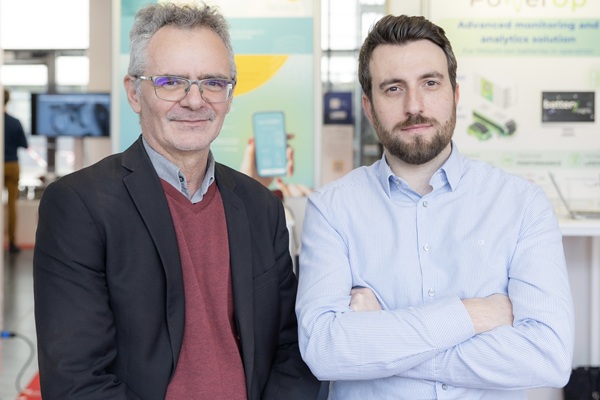
Luc Federzoni & Matthieu Verdon
co-founders
SOLREED

The energy transition cannot be truly sustainable if renewable infrastructures themselves do not become circular.
By tackling a still largely underestimated challenge—the lifespan of photovoltaic panels—SOLREED is developing advanced diagnostic, repair, and reuse solutions to extend the performance of solar power plants. A key innovation for supporting the energy transition, reducing costs, waste, and the carbon footprint of solar energy at the same time.
Matthieu Verdon, co-founder and CEO of SOLREED, shares more insights.
SOLREED is a French deeptech startup, spun off from the CEA and based on research conducted at CEA INES, specializing in the repair, refurbishment, and performance optimization of photovoltaic modules.
Our mission is simple: to sustainably extend the lifespan of photovoltaic panels, helping energy companies and solar plant operators maintain the performance of their assets while reducing their carbon footprint.
Today, we are building the first structured European value chain dedicated to the repair and industrial reuse of photovoltaic modules.
We help photovoltaic plant operators avoid premature replacement of defective panels by extending their lifespan through advanced diagnostics, repair, and reuse solutions.
Today, when a solar panel fails or loses performance, it is often replaced and discarded—even when it could continue operating for many more years.
At SOLREED, we have developed technologies capable of precisely identifying defects, repairing panels, and giving them a second life—either directly within existing solar plants or through reuse in new low-carbon solar projects.
In simple terms, we apply to solar energy the same logic as refurbishment in other industries: repair rather than discard.
Our differentiation is based on three key pillars.
Our technology combines field expertise, advanced testing (electroluminescence, flash tests, thermography, insulation tests, etc.), and intelligent monitoring tools to detect defects as early as possible.
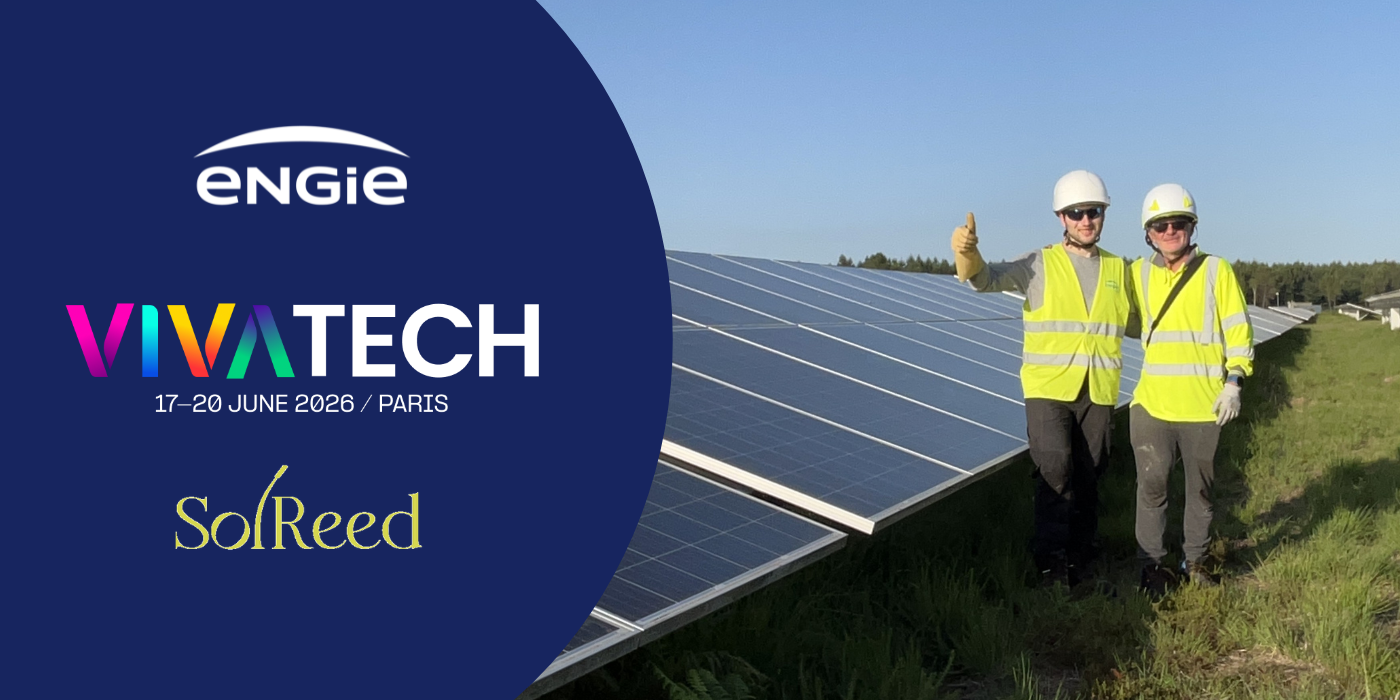
ENGIE plays a key role in SOLREED’s development. Our collaboration was built on a shared observation: operators of large photovoltaic plants are facing increasing challenges related to asset aging, availability of compatible spare parts, performance optimization, and reducing environmental impact.
ENGIE Green was one of the first major energy players to believe in our vision of large-scale repair and reuse of photovoltaic modules. This partnership enables us to work directly on real-life operational and maintenance challenges in solar plants, with a shared ambition: to build a more sustainable, circular, and resilient photovoltaic sector in Europe.
For a deeptech startup like SOLREED, collaborating with a global industrial player such as ENGIE is essential to accelerate industrialization, test solutions in real-world conditions, and maximize the environmental impact of our innovations.
We will present SOLREED’s vision of the “sustainable photovoltaic power plant.” Concretely, we will demonstrate how it is now possible to:
We will also showcase our approach combining industrial expertise, advanced diagnostic technologies, and intelligent monitoring tools.
The energy transition cannot be truly sustainable if renewable infrastructures themselves do not become circular.
The future of solar is not only about installing more panels—it is also about learning how to maintain, repair, and intelligently extend the lifespan of existing power plants.
Artificial intelligence already plays a key role in our technology strategy. We are developing tools capable of analyzing data from photovoltaic plants to identify electrical and thermal signatures associated with different types of failures. The goal is to help operators detect anomalies faster, prioritize interventions, and ultimately anticipate certain degradations before they significantly impact production.
In the coming years, we believe AI will become a true co-pilot for the maintenance of photovoltaic plants—connecting monitoring, diagnostics, repair, and performance optimization into a comprehensive asset management approach.
Our main challenge is scaling up industrialization. The European photovoltaic market is entering a phase where millions of panels will age simultaneously over the coming years.
We must therefore build industrial capabilities capable of meeting the needs of energy companies and plant operators, while ensuring quality, traceability, and performance of repaired or refurbished modules.
This is also a strategic challenge for Europe: developing true industrial sovereignty in photovoltaic maintenance, repair, and reuse.
In five to ten years, systematically replacing photovoltaic panels will have become the exception rather than the norm. Operators will have access to standardized solutions to repair, maintain, and extend the lifespan of their plants over several decades.
Solar energy will thus become a far more circular industry, with less waste, reduced dependence on critical raw materials, and a significantly lower carbon footprint.
We also believe Europe can foster a new industry around advanced photovoltaic maintenance and reuse—creating jobs, strengthening technological sovereignty, and enhancing energy resilience. key innovation for supporting the energy transition, reducing costs, waste, and the carbon footprint of solar energy at the same time.