Recognition of the climate change challenge has given increased momentum to often controversial discussions about two additional possible approaches to limiting climate change:
• Greenhouse gas removal from the ambient atmosphere, particularly CO2 as the most important climate forcer called Carbon Dioxide Removal (CDR)
• Intentionally reducing or reflecting solar radiation back into space to minimize global warming.
These proposed approaches have been referred to collectively under various names, including geoengineering, climate engineering, and climate interventions.
Although none of the proposed techniques exists yet at scales sufficient to affect the global climate, their place in climate change scenarios and policy discussions is increasing (i.e. extensive application of techniques for removing CO2 from the atmosphere in a scenario of the Intergovernmental Panel for Climate Change (IPCC)).
Geoengineering is a generic word referring to heterogeneous technologies that are not perceived by the general public in the same way. Some are very controversial, others much less so. Risks and benefits of this approach are not yet fully understood by the scientific community but are getting more and more attention.
How do these approaches work?
Carbon Dioxide Removal (CDR)
CDR refers to the process of removing from the atmosphere CO2 or other gases which produce global warming through greenhouse effects. Since this is the opposite of emissions, practices or technologies that remove CO2 are often described as achieving ‘negative emissions’. The process is sometimes referred to more broadly as greenhouse gas removal if it involves removing gases other than CO2. There are two main types of CDR:
• enhancing existing natural processes that remove carbon from the atmosphere (e.g., by increasing its uptake by trees, soil, or other ‘carbon sinks’),
• using chemical processes to, for example, capture CO2 directly from the ambient air and store it elsewhere (e.g., underground).
Negative Emissions Technologies (NETs) are technologies involved in CDR processes.
Solar Radiation Management (SRM)
Solar radiation management (SRM) or solar geoengenering (SG) goal is to decrease the amount of absorbed solar radiation through an increase in albedo (Albedo is the amount of sunlight (solar radiation) reflected by a surface). It aims to reflect away a very small fraction of sunlight back to space to partially offset the energy imbalance caused by accumulating greenhouse gases.

Controversial aspects of geoengineering
Geoengineering should not in any way slow down the carbon neutral energy transition and the deployment of renewable electricity and gases. It should never be used as an excuse to continue using fossil fuels. It is more like an emergency brake we may need to deploy to ensure we reach the 1.5 °C or 2 °C.
At this stage 3 main controversial aspects of geoengineering can be identified.
Many environmental NGOs advocate for a transformation of society rather than the development of compensatory technologies. For example, WWF summarized its position as follows: “Thinking that we will be able to continue on a “business as usual” scenario without changing our behaviors and way of life just relying on geoengineering is a lie. We need to reduce our anthropogenic input to climate change, and not try to fix it using dispendious technologies and spending funding that are crucially needed for both mitigation and adaptation measures. Some technologies will not have the support of key stakeholders. This is particularly the case for solar geoengineering and geological storage. Afforestation avoids this type of criticism. On the other hand, geoengineering advocates argue that potential short-term human behavior change is a riskier bet than geoengineering, with regard to the climate emergency.
For CDR, uncertainties are more about the permeability and stability of non-biobased storages (risks of leakage, seismic activity, and water contamination), while SRM’s uncertainties relate more to the climatic effects globally. To date, these uncertainties do not allow the IPCC to take these technologies fully into account in its scenarios (except for afforestation). Scientists are not aligned on the benefits of several geoengineering technologies. Therefore, risk of controversy is emphasized by technical debate. It should be noted here that afforestation and reforestation do not fall under this type of debate although many scientists warn that they are not a miracle solution and question the idea of a compensatory balance.
- Policy and governance issues
Finally, geoengineering also raises issues of policy and governance. Development of technologies with global impact should require the establishment of an international governance for cooperation and regulation (including experimentation, e.g. injection or spraying of molecules). For CDR, land use arbitration and mediation is an additional issue: geoengineering technologies vs agriculture, fisheries or local economy.
The measurement and assignment of credit for CO2 captured could be done unilaterally.
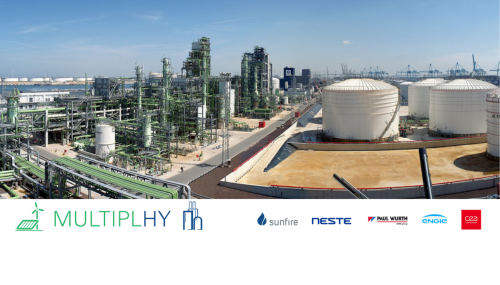
Main representative geoengineering projects.