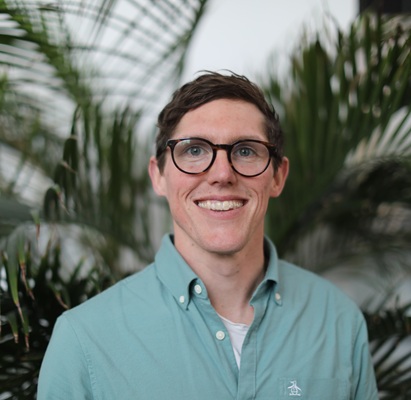
Thomas Fudge
Co founder and CEO
WASE

We are building the future of biomethane and renewable energy. Our solution can help deliver resilient, local energy sources and significantly strengthen Europe’s energy security.
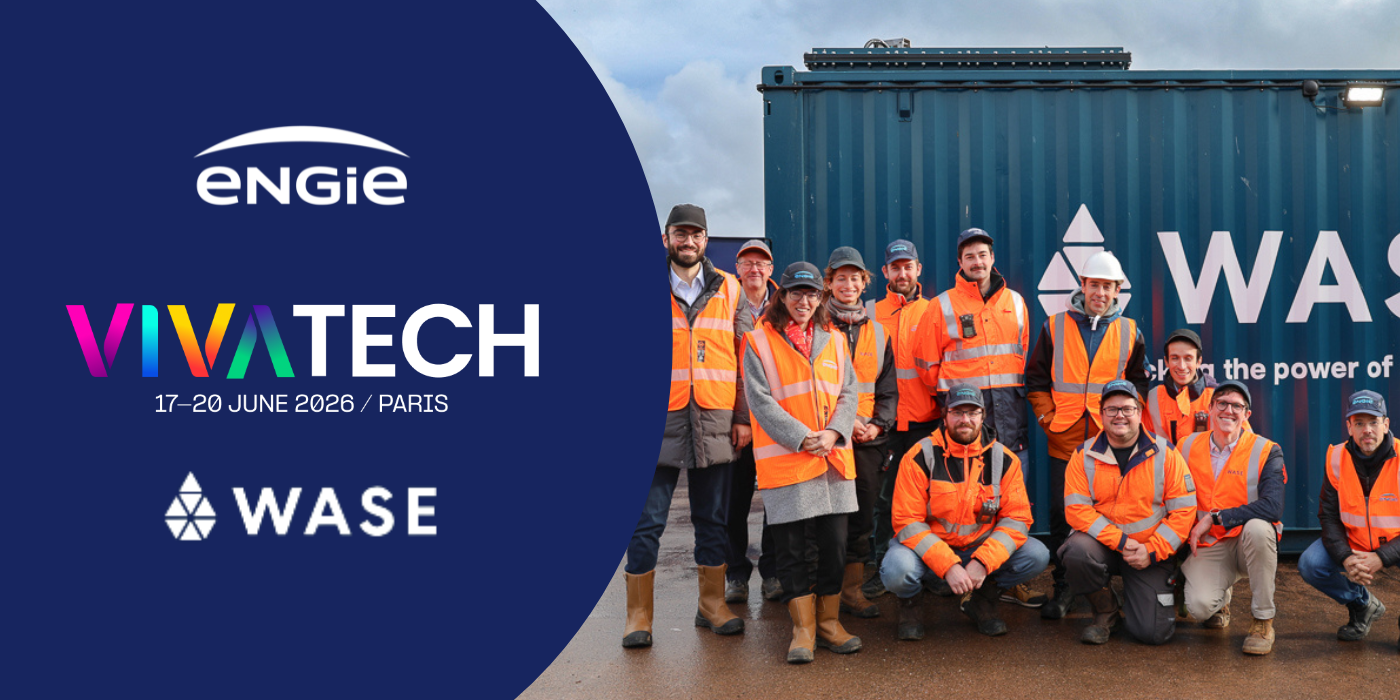
WASE will be featured on ENGIE’s booth at VivaTech from June 17 to 20. On this occasion, Thomas Fudge, co founder and CEO of WASE, shares more about the startup and its ambitions.
Our mission is to unlock the power of waste and turn it into the fuel of the future.
We help industrial manufacturers treat their wastewater, sludge, and solid waste directly on site, converting it into biogas. This enables them to decarbonise their energy demand while improving waste management.
There is also a very exciting opportunity to scale this technology to provide grid level biomethane and renewable natural gas. That’s exactly the work we’re doing today together with ENGIE.
Our process is called electro methanogenesis. In simple terms, we grow specific bacteria on electrodes inside a reactor. These bacteria break down organic material, generating electrons in the process.
Inside the digester, we produce hydrogen ions and carbon dioxide, which we are then able to convert directly into methane on the cathode. This allows us to accelerate the breakdown of organic compounds and significantly increase the amount of biogas produced.
The result is a much more efficient system, both in terms of treatment rate and energy production.
We have developed a patented electrode system that enables this accelerated breakdown of organic compounds. Today, we are the most advanced company operating this type of technology. We already have commercial units deployed and have demonstrated the technology at commercial scale, which is a key differentiator.
In addition, we have built an AI driven intelligence system that automates the operation of our plants. Using biosensing and soft sensing technologies, we can optimize and control performance without requiring highly skilled engineers on site. This allows us to improve reliability, optimise performance, and scale the solution much more efficiently.
We started engaging with ENGIE and GRDF about four or five years ago, initially through laboratory tests. These tests helped us prove the theoretical benefits of our technology and demonstrate performance improvements compared to traditional anaerobic digestion.
This collaboration led to an investment from ENGIE New Ventures, and today we are moving toward a fully structured commercial relationship.
We are currently testing and validating the technology at large pilot scale at one of ENGIE’s biomethane facilities in the UK, where we are seeing very strong performance gains. The next step is the construction of a 500 cubic meter reactor at the site, before moving toward full commercial deployment across the UK and Europe.
We’ll be showcasing a video that explains what the technology can do, along with a physical model of one of our systems. This will give visitors a clear view of how the technology operates and how it can be deployed in real world settings.
That we are building the future of biomethane and renewable energy. Our solution can help deliver resilient, local energy sources and significantly strengthen Europe’s energy security. There is a huge amount of untapped value in waste, and our technology makes it possible to unlock it.
AI will become increasingly critical in optimising industrial facilities. Small, incremental improvements, what we call micro optimizations, have a major impact on resilience, uptime, and overall performance.
Our solution is not just hardware; it’s a complete software and data package. AI allows us to interpret complex data that would otherwise be very difficult for operators to manage, especially in facilities without highly specialised scientific teams on site.
By using AI, we can significantly improve energy yield, treatment efficiency, and operational resilience, making plants both smarter and more reliable.
Right now, we’re in the process of raising investment. Once that’s completed, our focus will be on scaling the team and accelerating deployment.
We already have projects moving forward in the United States, as well as a strong pipeline in Italy and Spain. At the same time, we’re scaling up the technology to demonstrate its potential at grid level biomethane production.
Our goal is to truly unlock the global power of waste. Working with ENGIE, we aim to enable the production of 10 terawatt hours of renewable natural gas worldwide. We want this technology to be deployed across multiple continents, helping transform waste into a major pillar of the global energy transition.

Come and meet WASE on ENGIE's booth at Viva Technology, on June 17-20, 2026.