
Amine Benkirane
Head of New Solutions Development
ENGIE Local Energy Infrastructures

Decarbonizing industrial heat is already possible today—without upfront investment—while improving economic performance and contributing to grid stability.
Amine Benkirane, Head of New Solutions Development at ENGIE Local Energy Infrastructures, shares insights into this offering, its use cases, and its potential for industrial players.
Enable industrial players to decarbonize their heat production while sustainably controlling their energy costs.
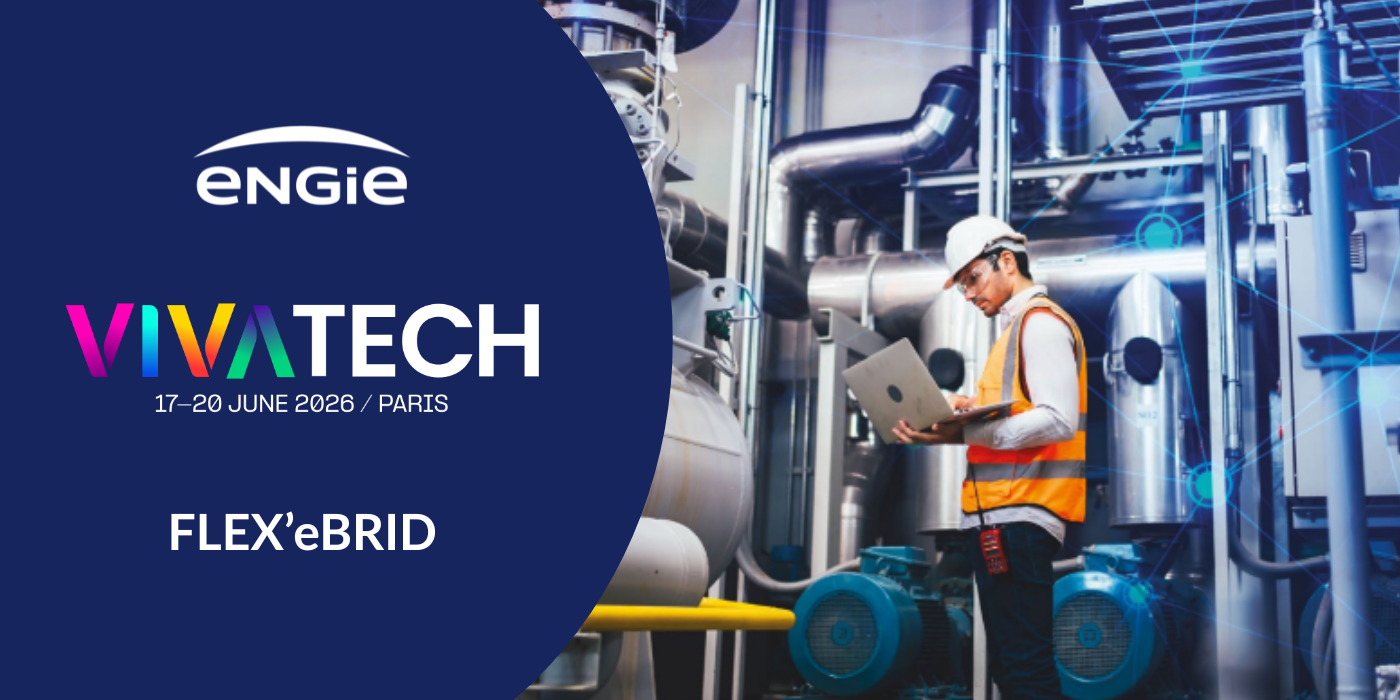
We replace part of gas-based heat production with smart electric boilers. These systems generate heat when electricity is low-carbon and cost-efficient, and they adapt in real time to the needs of the power grid—without requiring any upfront investment from the client.
Our clients are industrial sites with high heat consumption (steam, hot water). The solution is used by energy managers and technical teams on-site, as well as ENGIE teams responsible for operations and energy management.
FLEX’eBRID enables:
We will present FLEX’eBRID through real industrial use cases, a clear explanation of gas-to-electricity optimization, and the key role industrial flexibility plays in the energy transition.
Decarbonizing industrial heat is already possible today—without upfront investment—while improving economic performance and contributing to grid stability.
Artificial intelligence is used to optimize real-time system operations, forecast energy prices, and activate flexibility levers. In the long run, it will enable more autonomous and large-scale management of industrial assets across Europe.
Scaling up deployment of the solution in France and across Europe, while continuously adapting it to evolving market and regulatory frameworks.
Industrial heat will be largely electrified, flexible, and intelligently managed—becoming a key driver of industrial competitiveness and the transition to a low-carbon energy system.